
Hard Sayings
Doctrine that offends before it is understood, and why the Lord so often gives the command long before He gives the reason
What a Hard Saying Is
A hard saying is a true doctrine delivered before the hearer has what he needs to make sense of it. It is not error. Neither is it a test of intelligence, and the disciples who struggle most with one are frequently the best-taught people in the room.
The term comes from the reaction of the disciples at Capernaum, who said of the Savior’s teaching, “This is an hard saying; who can hear it?” (John 6:60). The Greek word rendered hard is sklēros, which carries the sense of harsh or offensive rather than merely puzzling. Were they confused? They were SCANDALIZED.
Understanding this pattern matters. A member who has never considered it will assume that anything difficult must therefore be false, and scripture teaches the opposite. Difficulty is a normal feature of revelation given to mortals, and the Lord has never bound Himself to explain first.
The Pattern in John 6
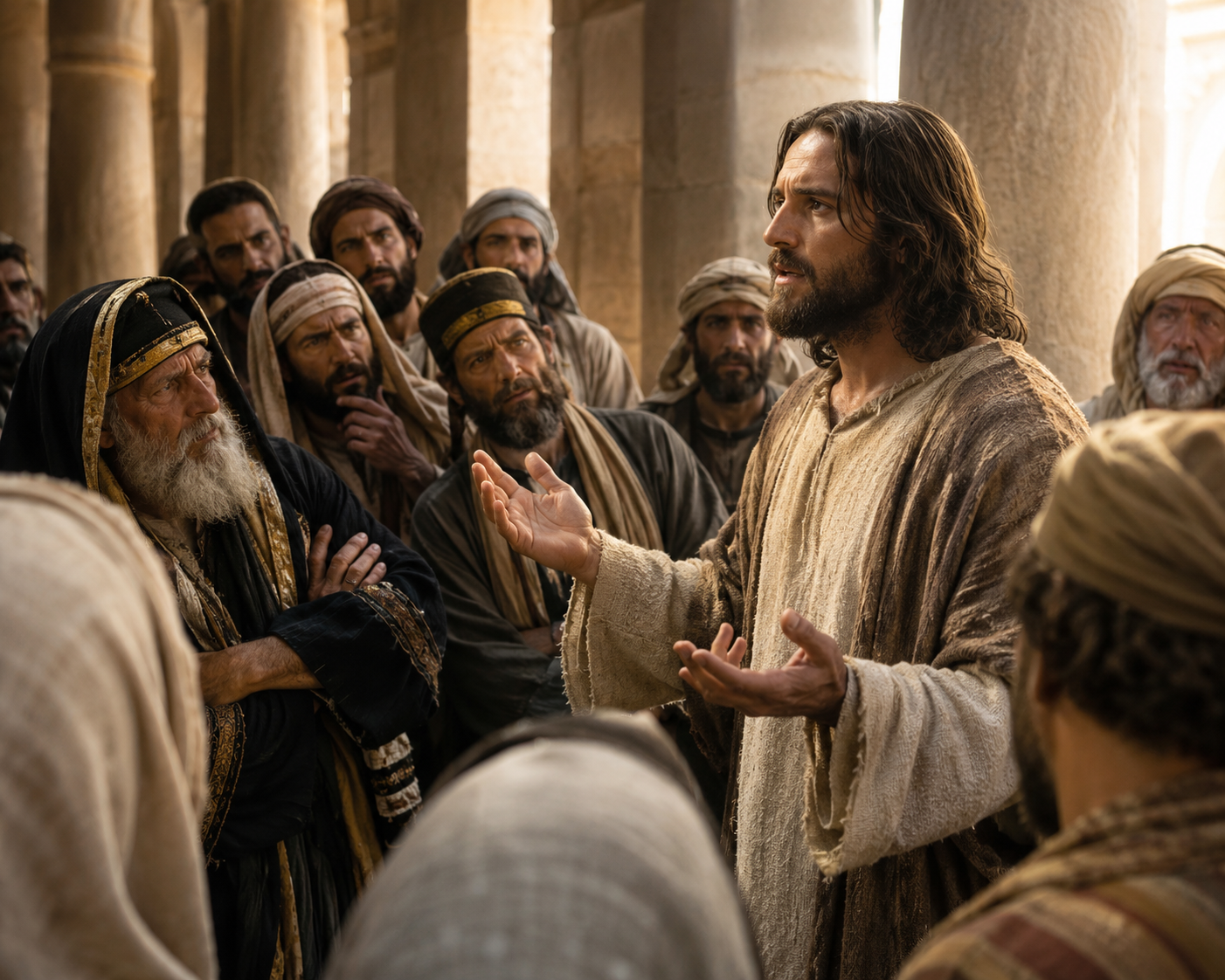
The clearest example in all of scripture is the bread of life sermon, delivered in the synagogue at Capernaum the day after the feeding of the five thousand.
“Except ye eat the flesh of the Son of man, and drink his blood, ye have no life in you. Whoso eateth my flesh, and drinketh my blood, hath eternal life; and I will raise him up at the last day.”
A modern reader hears the sacrament in those words. His audience did not, and could not, because the sacrament had not yet been instituted. What they heard was a requirement that broke two of the gravest prohibitions in the law of Moses.
The prohibition against consuming blood is given to Noah in Genesis 9:4, made a perpetual statute in Leviticus 3:17, and repeated in Deuteronomy 12:23–25. Its penalty was severe.
“I will even set my face against that soul that eateth blood, and will cut him off from among his people. For the life of the flesh is in the blood.”
Eating human flesh carried an even darker weight. Throughout the Hebrew Bible it appears almost exclusively as covenant curse and as the horror of a besieged city, in passages such as Leviticus 26:29, Deuteronomy 28:53, Jeremiah 19:9, and Lamentations 4:10. The objection recorded in verse 52 was therefore the reaction of men who knew their scriptures well.
What happened next is the instructive part. Did the Savior soften the teaching? In the Greek text the verb changes at verse 54 from phagein, the ordinary word for eating, to trōgō, a coarser word closer to chewing or gnawing, and He repeats it through verses 56, 57, and 58. The language grew more vivid after the objection rather than less.
He offered NOTHING by way of clarification. Verse 63 teaches that His words are spirit and life, which describes their source rather than retracting their content, and the chapter then closes with a sober verse.
“From that time many of his disciples went back, and walked no more with him.”
Those who left were DISCIPLES, not enemies. They measured a new revelation against the scripture they already held, found a contradiction, and acted on it. The Lord let them go. He then turned to the Twelve with a question of His own: “Will ye also go away?”
Peter’s Answer and What It Rested On
Peter did not claim to understand the sermon. He offered no reconciliation with Leviticus and made no attempt to explain the doctrine to the men who were leaving.
“Lord, to whom shall we go? thou hast the words of eternal life. And we believe and are sure that thou art that Christ, the Son of the living God.”
His answer rested on a WITNESS he had already received concerning the Savior’s identity. Knowing who was speaking, he was willing to carry an unresolved teaching until the meaning came.
Nephi expressed the same principle in different words when the angel asked whether he understood the condescension of God: “I know that he loveth his children; nevertheless, I do not know the meaning of all things” (1 Nephi 11:17). Certainty about God’s character can coexist with real ignorance about a doctrine, and that combination is a mature faith rather than a compromised one.
The Explanation Came Later
The meaning of the Capernaum sermon arrived roughly a year afterward, in the upper room, when the Savior broke bread and passed the cup and gave His body and blood as emblems of the atoning sacrifice and of the covenant that binds His disciples to Him (Matthew 26:26–28; Luke 22:19–20).
Paul was still unfolding its meaning decades later (1 Corinthians 11:23–29), and the Savior taught it again to the Nephites when He instituted the sacrament among them (3 Nephi 18:1–11).
The disciples who required an explanation before they would stay were ABSENT for all of it. Those who stayed without one partook of the first sacrament from the Savior’s own hands.
The Same Pattern Throughout Scripture
Capernaum is the clearest case, though it is far from the only one. The Lord has repeatedly given commands that appeared to conflict with revelation already received.
| The command | What it appeared to violate | When the meaning came |
|---|---|---|
| Abraham told to offer Isaac (Genesis 22) | The abhorrence of human sacrifice, and the covenant promise made through Isaac himself | On the mountain, and more fully in the similitude of the Father and the Son (Jacob 4:5) |
| The brazen serpent (Numbers 21) | The commandment against graven images, so recently broken with the golden calf | Centuries later, when Christ named it a type of Himself (John 3:14–15) |
| Peter’s vision of the sheet (Acts 10) | The dietary law he had kept his whole life; he objected to the Lord directly | At the house of Cornelius, when the gospel opened to the Gentiles |
| Circumcision set aside (Acts 15) | An everlasting covenant in the flesh (Genesis 17:13) | Through living apostles acting under the direction of the Holy Ghost |
Why the Lord Withholds the Reason
Why would a loving God do this? Scripture gives the reason plainly, and it is not arbitrary. Faith must be exercised before the witness is given, or it would not be faith at all.
“Dispute not because ye see not, for ye receive no witness until after the trial of your faith.”
The Savior taught the same order of things during His ministry: “If any man will do his will, he shall know of the doctrine” (John 7:17). DOING comes first, and knowing follows after it. Paul adds that the things of the Spirit are spiritually discerned and appear as foolishness to a man reasoning without the Spirit (1 Corinthians 2:14).
There is also a matter of capacity. The Lord teaches line upon line and precept upon precept (Isaiah 28:10), and He told the Twelve directly that He had more to say than they could then bear (John 16:12). A doctrine withheld is often a mercy rather than a secret.
How a Disciple Responds
Nothing in this doctrine asks a member to suspend judgment or to accept whatever he is told. Scripture supplies genuine tests, and they should be used.
A prophet who calls after other gods is false even when his sign comes to pass (Deuteronomy 13:1–3). Fruit is a valid measure (Matthew 7:15–20). John gives a Christological test (1 John 4:1–3). Which of them asks whether a teaching already appears in the text a person happens to possess? Not one. Had that been the standard, the New Testament could never have been written.
The decisive test is PERSONAL revelation. Moroni invites every reader to take the matter to God directly and promises an answer by the power of the Holy Ghost (Moroni 10:4–5), and the Lord requires real effort beforehand rather than a casual request (D&C 9:8–9).
When a teaching is hard, the pattern Peter followed remains available. Hold to the witness already received, keep the covenants already made, study honestly, ask sincerely, and give the Lord time to supply what He has not yet supplied. Meaning that arrives after patient obedience is generally deeper than meaning demanded on the spot.
Key References
- John 6:53–69 — the bread of life sermon, the departure of many disciples, and Peter’s answer
- Ether 12:6 — no witness until after the trial of your faith
- John 7:17 — doing the will of the Father precedes knowing the doctrine
- 1 Nephi 11:17 — knowing God loves His children while not knowing the meaning of all things
- John 16:12 — “I have yet many things to say unto you, but ye cannot bear them now”
- Moroni 10:4–5 — the standing invitation to ask God and receive a witness
Hard sayings are part of how God teaches mortals. They separate those who follow a person from those who follow only a proposition, and they always have. The disciples who remained at Capernaum did not understand that sermon one bit better than the disciples who walked away from it. They simply knew whom they were following, and a year later they were sitting in the upper room while the Lord explained it.