
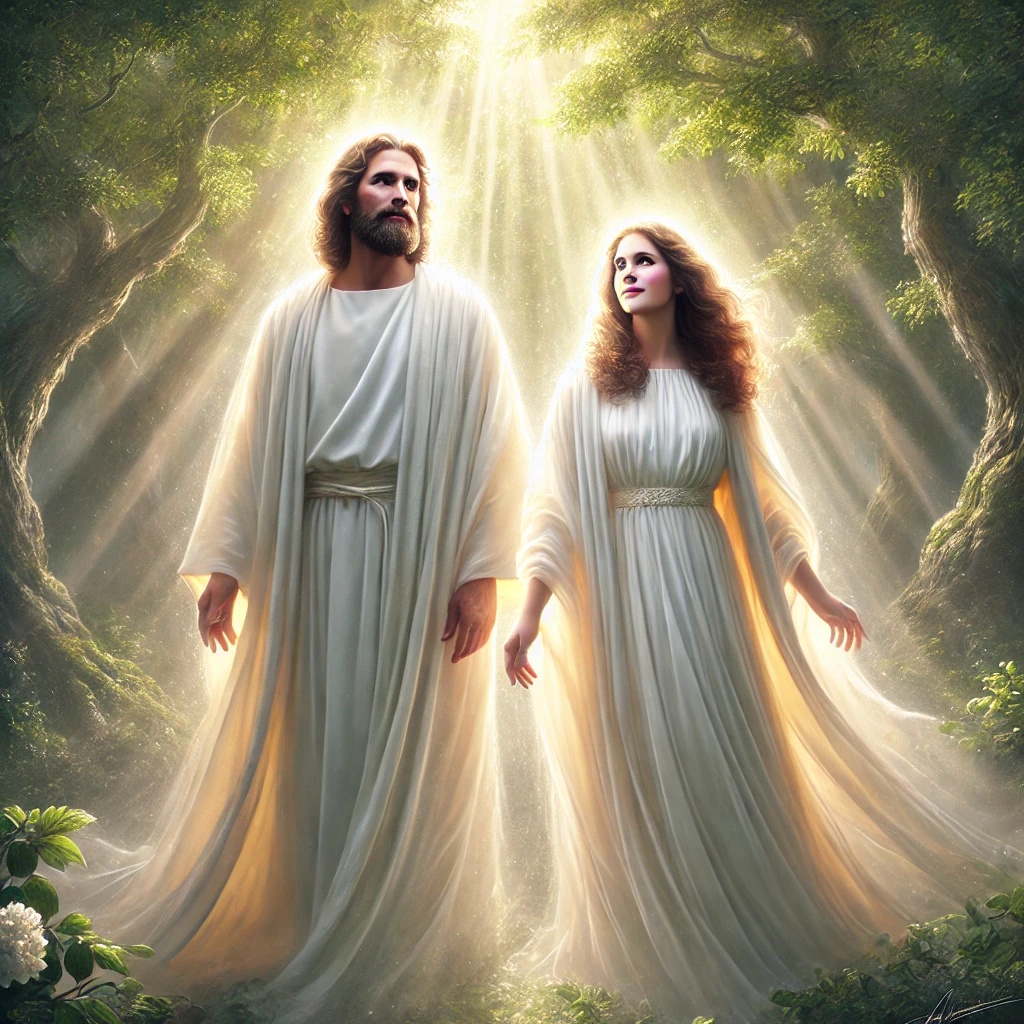
What Is a God, and Who Is Our Heavenly Father?
The character, attributes, and nature of divine beings
What Makes Someone a God?
Those who hold the title God are beings who possess specific attributes and characteristics that qualify them for it. Their primary work is to bring to pass the immortality and eternal life of men and women (Moses 1:39). They exercise their power with perfect righteousness, seeking the exaltation and eternal happiness of all mankind.
Importantly, possessing a celestial, resurrected body is not a strict prerequisite for holding this title. Jesus Christ was Jehovah prior to His mortal birth — fully divine, yet at that time a spirit being — serving as the God of the Old Testament. Likewise, the Book of Abraham describes the Gods convening in a grand council to formulate the plan of creation, then proceeding to organize the elements and create the earth (Abraham 3:22–28; 4:1–3).
Some Gods, however, are also fully exalted beings — distinct individuals, each possessing a glorified, immortal body. These exalted Gods are beings of perfect love, justice, mercy, wisdom, and holiness. They are omniscient and omnipotent, possessing knowledge and power far beyond mortal capacity. Dwelling together in unity — one heart, one mind, and one divine mission — they act in perfect concert to accomplish Their work and glory.
“For behold, this is my work and my glory — to bring to pass the immortality and eternal life of man.”
Eternal Gender as an Attribute of Exalted Beings
One essential, eternal characteristic of every individual — whether in a spirit body, a physical body, or an exalted state — is gender. Latter-day Saint teachings declare that each person’s gender is part of their eternal identity, meaning that exalted beings maintain their distinct masculine or feminine identity before birth, during mortality, and after resurrection.
Consequently, alongside divine Fathers there are equally divine Mothers. From the beginning, scripture teaches that “it is not good that man should be alone,” and Latter-day Saints believe this principle continues eternally (Genesis 2:18; D&C 132:15–17). If God the Father is an exalted man, it follows that He is not alone — He has a Heavenly Companion, a Goddess by His side.
Our Heavenly Mother
Some feel a reluctance to openly discuss our Heavenly Mother, but this hesitation is unfounded. It is a fundamental doctrine in Latter-day Saint belief that we have Heavenly Parents — Father and Mother. Although revelation directs us to address our prayers to our Father in Heaven, and the scriptures primarily speak of Him, this in no way diminishes the certainty that He is not alone.
They are so totally unified in mind, purpose, goal, and action that speaking of one is in practice speaking of the other. Their unity is complete and harmonious — a oneness of heart, mind, and soul coupled with eternal glory we do not yet comprehend.
“And that same sociality which exists among us here will exist among us there, only it will be coupled with eternal glory, which glory we do not now enjoy.”
We speak reverently of our Heavenly Mother in the same spirit as prophets and apostles who have acknowledged Her sacred role while exercising appropriate restraint — not offering speculation beyond what the Lord has revealed. Her existence affirms the eternal nature of divine womanhood, and Her presence alongside the Father testifies of a fullness of divine partnership and love.
The Attributes of Our Heavenly Parents
Omniscience and Wisdom
They are omniscient — nothing is beyond Their understanding or knowledge. They know all things from the beginning (Isaiah 46:10), and this perfect knowledge forms the basis of our faith in Them. Their wisdom and omniscience (2 Nephi 9:20) enables Them to execute the divine plan of salvation with justice, mercy, and grace (Alma 42:13–15).
Unity in Purpose
As They work in partnership to bring about the immortality and eternal life of Their children, for reasons not fully revealed, we deal directly with our Father. The scriptures therefore speak primarily of Him and His interactions with His children — but we understand that speaking of Him is speaking of Them. All people are beloved spirit sons and daughters of their Heavenly Parents (The Family: A Proclamation to the World; John 17:5, 22–23; 3 Nephi 11:27, 36).
His glory is that of the Celestial Kingdom, where those who attain exaltation will live with Him in that same state of eternal perfection (D&C 76:50–70). Yet despite the existence of many exalted beings, for us there remains only one God the Father — just as we have only one earthly father.
The Nature of the Godhead: Father, Son, and Holy Ghost
We believe in God the Eternal Father, His Son Jesus Christ, and the Holy Ghost. These three beings are distinct individuals, yet they are perfectly united in purpose, will, and action. Together they form the supreme governing council in heaven.
Their unity is so complete that they act as one — yet they are not one singular being. Jesus emphasized this in His Intercessory Prayer, pleading that His disciples might be one with Him just as He is one with the Father (John 17:20–23). This oneness is a perfect alignment of will, not a merging of identity.
Just as the Father and His eternal companion are united in purpose while remaining unique individuals, so too are the members of the Godhead — distinct in person, yet one in heart, mind, and mission.
| Member | Identity | Distinct Role |
|---|---|---|
| God the Father | Elohim; Heavenly Father; Father of our spirits | Supreme head; Organizer of spirit bodies; object of our worship and prayer |
| Jesus Christ | Jehovah; the Son; our Elder Brother and Redeemer | Savior and Mediator; Creator under the Father; declares “my Father is greater than I” (John 14:28) |
| Holy Ghost | A spirit personage; the Comforter | Witness and sanctifier; can dwell within us because He has no physical body |
Key References on the Godhead
- John 17:20–23 — Christ’s intercessory prayer; the nature of divine unity
- John 14:28 — “My Father is greater than I” — distinct identities within the Godhead
- John 20:17 — “My God and your God” — a shared relationship with the Father
- D&C 130:22 — The Father and Son as distinct, tangible, personal beings
Who Is God the Father?
God the Father is our Father in Heaven, the literal Father of our spirits. He and His companion are the Organizers of our spiritual bodies (Hebrews 12:9). Just as we have one physical father on earth, we have one spiritual Father, who created us in His image (Genesis 1:27). This familial relationship emphasizes the direct and personal connection we have with Him as both our divine parent and the supreme leader of the heavens.
Although we understand that our spirit bodies were organized rather than created from nothing, we have no revealed knowledge of how our eternal parents accomplished this — nor how they embody them with an intelligence co-eternal with themselves. Any claim to know how this occurred goes beyond what has been revealed in scripture, which remains the measure and standard of our doctrine.
The term God or Elohim can cause confusion, as it functions both as a title and a name. While the Father, Jesus Christ, and the Holy Ghost can all bear the title “God” by virtue of their divine nature and authority, God the Father is uniquely the Organizer of our spirit bodies and the central object of our worship. Jesus Christ refers to the Father as His God and our God (John 20:17), underscoring this shared relationship.
His Physical Nature
Doctrine and Covenants 130:22 teaches that the Father has a body of flesh and bones as tangible as man’s. He is a resurrected, perfected being with all the attributes of a glorified and exalted individual (Alma 11:43–44). God is perfect in form and expression. His glorified physical body is beyond mortal comprehension, yet He is a distinct individual who can be known and seen — possessing a distinctive countenance and personal expression.
“We shall see him as he is.”
In the resurrection, we shall see Him as He is and know Him perfectly, just as He knows us (2 Nephi 9:14; 1 John 3:2–3).
God Is No Respecter of Persons
God does not show partiality or favoritism based on status, wealth, race, when someone lived on the earth, or whether they heard of Jesus Christ in mortality. He treats all people equally, judging them by their hearts, faith, and choices rather than by outward appearances or worldly circumstance.
Supporting Scriptures
- Acts 10:34–35 — “Of a truth I perceive that God is no respecter of persons: But in every nation he that feareth him, and worketh righteousness, is accepted with him.”
- Romans 2:11 — “For there is no respect of persons with God.”
- 2 Nephi 26:33 — “He doeth not anything save it be for the benefit of the world… he commandeth none that they shall not partake of his salvation.”
All people, regardless of earthly conditions, have equal access to God’s love, grace, and the blessings of the gospel. Salvation is available to all, and God’s judgments are based on character and choice — not social standing, the era in which one lived, or any external factor.
God’s Eternal Purpose
The Father’s purpose is succinctly stated in Moses 1:39: to bring to pass the immortality and eternal life of man. Everything God does centers on this divine purpose — helping His children become like Him.
The Father organizes intelligences into spirits, giving them the opportunity to enter mortality with a physical body, to learn, grow, and experience the challenges of life. Through the Atonement of Jesus Christ and the principles of faith, repentance, baptism, and the gift of the Holy Ghost, they may receive a remission of sins. All mankind — good and bad — will be resurrected and receive immortal bodies (1 Corinthians 15:42–44).
After resurrection, individuals will be judged according to their works and prepared degree of glory (D&C 88:21–24). Those who follow the plan of salvation and accept the Atonement can inherit the highest degree of glory, becoming joint-heirs with Christ (Romans 8:17).
God’s work is to provide this opportunity: to progress eternally, not merely through improvement or knowledge, but through posterity and participation in divine life itself. Eternal life is not simply immortality — it is living the kind of life God lives, in relationship with Him, for all eternity.
“And if children, then heirs; heirs of God, and joint-heirs with Christ; if so be that we suffer with him, that we may be also glorified together.”
This is the great hope and eternal truth of the gospel: that we are children of God, born of divine Parents, with the potential to become like Them — dwelling in eternal glory and participating in Their work, even as we come to fulfill our own divine potential.