Horses in the Book of Mormon (under construction...)
The mention of horses in the Book of Mormon has long been a topic of debate and discussion among scholars, critics, and believers alike. Critics often point to the absence of concrete archaeological evidence for horses in pre-Columbian America as a flaw or anachronism in the text. However, a deeper exploration into the subject reveals that this issue is not only complex but also highlights the limitations of our current knowledge and understanding of ancient American history.
The Controversy of Horses in Ancient America
The primary contention revolves around references to horses in the Book of Mormon during periods when, according to mainstream archaeology, horses were thought to be extinct in the Americas. The common scientific narrative suggests that horses disappeared from the American continents around 10,000 years ago and were only reintroduced by Europeans in the 15th and 16th centuries. This timeline seems to conflict with the Nephite and Jaredite civilizations described in the Book of Mormon, which purportedly existed between 2500 BCE and 400 CE.
Reassessing Archaeological Evidence
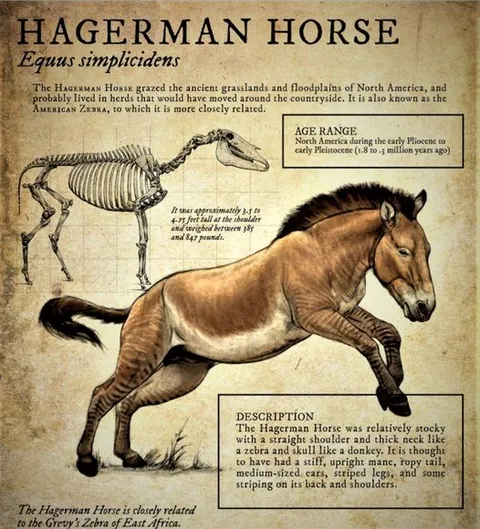
Recent studies and discoveries have begun to challenge the traditional timeline of horse extinction in the Americas. Some paleontologists and archaeologists have uncovered remains and artifacts that suggest horses may have survived longer than previously thought, or that they were reintroduced earlier than the arrival of Europeans.
For instance, findings in sites across North America, such as the Yukon and various locations in the United States, have produced horse remains that date closer to the periods mentioned in the Book of Mormon. While these findings are still subject to scientific scrutiny and debate, they open the possibility that small populations of horses could have existed during the times of the Nephites and Jaredites.
Alternative Explanations and Interpretations
Another avenue to consider is the interpretation of the term "horse" within the context of the Book of Mormon. It's possible that the word "horse" was used by the ancient authors to describe animals that were functionally similar or familiar to them, even if they were not horses as we define them today. This linguistic phenomenon, known as loan-shifting, is common in human languages when encountering new or unfamiliar fauna.
For example, early Spanish explorers used familiar terms to describe new animals they encountered in the Americas, such as calling llamas "sheep" or referring to bison as "cows." Similarly, the Nephites might have used the term "horse" to describe animals like tapirs or other large mammals that played a similar role in their society.
Limitations of Archaeological Records
The absence of evidence is not evidence of absence. The archaeological record is inherently incomplete, and many factors contribute to the scarcity of findings, especially organic materials like animal remains. Climate, soil conditions, and the passage of time can all affect the preservation of such evidence.
Moreover, much of the American continent remains unexplored archaeologically, and new discoveries are continually reshaping our understanding of ancient civilizations. The discovery of previously unknown cities, artifacts, and even entire cultures emphasizes how much there is yet to learn.
The Broader Context of Ancient Transoceanic Contact
There is growing evidence to suggest that transoceanic contact between the Old World and the New World may have occurred before Columbus. Artifacts, genetic studies, and cultural similarities point toward interactions that could have included the exchange of animals, plants, and technologies.
If such contact did occur, it could provide a plausible explanation for the presence of horses or horse-like animals in the Americas during the times described in the Book of Mormon.
Conclusion
The issue of horses in the Book of Mormon is not a definitive contradiction but rather a reflection of the complexities and limitations of our current knowledge. Ongoing research and discoveries continue to challenge previous assumptions and open new possibilities for understanding ancient American history.
The mention of horses in the Book of Mormon encourages us to approach historical and archaeological questions with humility and openness. It highlights that our interpretations are often based on incomplete data and that future findings may well provide clarity.
In essence, rather than being an insurmountable problem, the discussion about horses in the Book of Mormon serves as a reminder of the vastness of history and the continual journey of discovery. It underscores the importance of keeping an open mind and acknowledges that there is still much we do not know about the ancient peoples of the Americas.
References:
https://www.fairlatterdaysaints.org/answers/Horses_in_the_Book_of_Mormon
https://scripturecentral.org/blog/new-evidence-for-horses-in-america
https://www.fairlatterdaysaints.org/archive/publications/horses-in-the-book-of-mormon
https://bookofmormonevidence.org/book-of-mormon-horses-in-ancient-north-america/
https://beggarsbread.org/2020/09/13/pre-columbian-american-horses-and-the-book-of-mormon/
https://www.ldsliving.com/why-are-horses-mentioned-in-the-book-of-mormon/s/87074
https://mormonlifehacker.com/evidence-of-the-book-of-mormon-horses-in-ancient-america/
https://scripturecentral.org/q-and-a/why-does-the-book-of-mormon-mention-horses
https://latterdaysaintmag.com/why-are-horses-mentioned-in-the-book-of-mormon-2/
https://www.ldsscriptureteachings.org/2020/02/horses-in-the-book-of-mormon/
http://bmaf.org/articles/ancient_horses__johnson
https://ldsanswers.org/horses-anachronism-book-mormon-precolumbian-horses-discovered-america/
https://wizzley.com/the-survival-of-horses-in-pre-columbian-america/
Ute Petroglyph in Arches National Park, Utah, carved between A.D. 1650 and 1850
Possible additional information:
Evidence Supporting Pre-Columbian Horses
a. 1918 Discovery in Canada
T.L. Tanton's Report (1931): Bones identified as horse remains and a copper spearhead were found in an excavation in Westfort, Ontario, suggesting an earlier presence of horses. Reference: Tanton, T.L. (1931). Geological Survey of Canada Memoir 167: Fort William and Port Arthur and Thunder Cape Map-Areas. Ottawa: F.A. Acland, Printer to the King’s Most Excellent Majesty. [Available in academic libraries]
“The compete extirpation of ancestral horse stock in Canada has yet to be completely confirmed, and a bone found near Sutherland, Saskatchewan, at the Riddell archaeological site suggests some horses might have survived much later,” stated Robert M. Alison of Orillia, Ontario, in 2000 in a research paper called Canada's Last Wild Horses. “The bone (Canadian Museum of Nature I-8581), has been tentatively dated at about 2900 years ago. Another Equus sp. Bone, found at Hemlock Park Farm, Frontenac County, Ontario, dates to about 900 years ago. Exhaustive confirmation of both bones has yet to be completed, but if they prove to be authentic, they comprise evidence that horses survived in Canada into comparatively modern times.” (Sorry, the link to this article also is no longer available. I am trying to find a new copy of the story.)
b. Wisconsin Burial Mound
Chuck Bailey's Report (1990): A horse skull was reportedly found in a burial mound with artifacts dated around 700 AD. Reference: Bailey, Chuck. "Survival of the Pre-Columbian Horse?" Louisiana Mounds Society Newsletter, Issue 31, March 15, 1990, p. 4.
c. Radiocarbon-Dated Horse Bones
Inquiry by Holland Hague (1990): Mention of horse bones radiocarbon-dated to pre-Columbian times, though not extensively studied. Reference: Louisiana Mounds Society Newsletter, Issue 29, January 1, 1990, p. 5.
Pictographs and Carvings Depicting Horses
a. Peru's Ica Stones
Dr. Javier Cabrera's Collection: Carved stones depicting horses and other figures, claimed to be ancient. Reference: Reib, John Dan. "Peru's Incredible Ica Stones." The Ancient American, Vol. 1, Issue 3, Nov/Dec 1993.
b. Temple of the Warriors, Chichén Itzá
Bearded Man on Horse Carving: Photograph by Otto Done showing a carving that some interpret as a man on a horse. Reference: Done, Otto. Photograph published in The Improvement Era, December 1955. [Note: The Improvement Era was an official publication of The Church of Jesus Christ of Latter-day Saints until 1970.]
c. Monte Vista, Colorado Pictographs
Ancient Rock Carvings: Pictographs near Monte Vista resembling horses. Reference: Published in The Improvement Era, October 1955.
d. Moundbuilder Artifacts
Henrietta Mertz's Work: Stone tablets and artifacts from Michigan Moundbuilders depicting horses. Reference: Mertz, Henrietta. The Mystic Symbol: Mark of the Michigan Mound Builders. Kessinger Publishing, 1986. [ISBN: 9781564594684]
e. Anubis Cave, Colorado
Pictographs with Ogham Script: Findings by Gloria Farley indicating Old World connections and horse depictions. Reference: Farley, Gloria. In Plain Sight: Old World Records in Ancient America. Guthrie, OK: Walsworth Publishing Company, 1994. [ISBN: 9780962209908]
f. Picture Canyon, Oklahoma
Horse Pictographs: Ancient carvings considered to date back to the Moundbuilder period. Reference: Farley, Gloria. In Plain Sight: Old World Records in Ancient America, 1994.
Additional References
Barry Fell's Research Reference: Fell, Barry. Saga America. New York: Times Books, 1980. [ISBN: 9780812909166]