
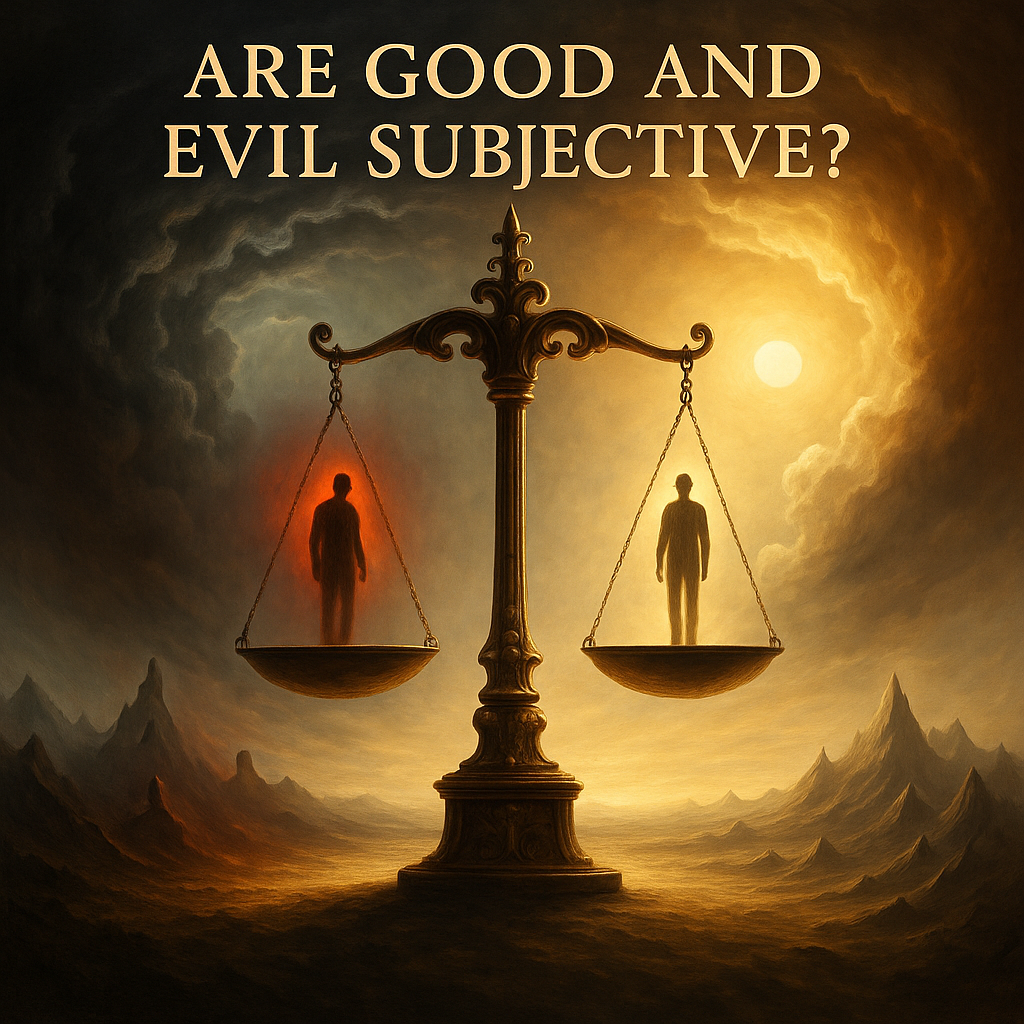
Are Good and Evil Subjective?
Some people claim that “good” is simply whatever God wills, and “evil” is whatever goes against His will—making good and evil appear wholly dependent upon God’s desires.
I argue, however, that this is not the case: good and evil are not subjective but objective. They are grounded in reality itself—not merely constructs of any being’s mind. While God’s will aligns perfectly with good, what is good remains good even if one were to deny or reject God.
Good and Evil Are Independent of God
Although God perfectly embodies and promotes what is good, the standard of good and evil stands independent of Him. He aligns His will with goodness, but the object and goal of His will—eternal life and exaltation of humankind—exists as a concept outside of His mind. Because it is part of reality, it is also objective.
Scriptural Foundations
“Wherefore, all things which are good cometh of God… the way to judge is as plain, that ye may know with a perfect knowledge, as the daylight is from the dark night.”
“And truth is knowledge of things as they are, and as they were, and as they are to come.”
The Physics of Choice
D&C 93 recasts this in the vocabulary of light and truth—declared to be the very glory of God (vv. 36–37), permeating the universe as an objective reality. Every moral decision either receives light or drives it away. When we harmonize with eternal law, our intelligence “groweth brighter and brighter until the perfect day” (D&C 50:24). Conversely: “That wicked one cometh and taketh away light and truth” (D&C 93:39).
Conclusion
In the end, good and evil are fixed points in reality, not the shifting moods of a cosmic ruler. To choose the good is not blind obedience but clear-eyed partnership with reality—and with the God who perfectly embodies it.