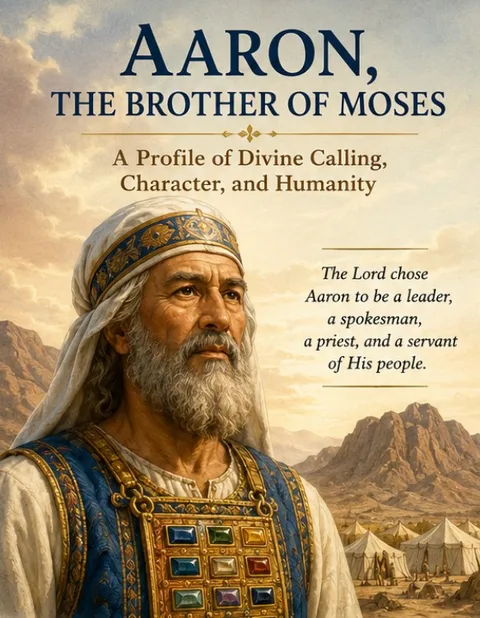
Aaron, the Brother of Moses
A Profile of Divine Calling, Character, and Humanity
Aaron is remembered not only as the elder brother of Moses but also as a man chosen by the Lord to serve in one of His most pivotal deliverances. His life offers a portrait of both remarkable strength and human frailty—a pattern that continues to instruct and inspire those who hold the Aaronic Priesthood today.
Family and Background
Aaron was born to Amram and Jochebed of the tribe of Levi. Although his family was not initially recognized for priestly service during their early years in Egypt, their Levite heritage gained significance as God’s plan for Israel unfolded. By the time of the Exodus, the unique calling of Aaron’s lineage was revealed, preparing him to serve as a key spiritual leader among the children of Israel.
Divine Calling and Role
When the Lord called Moses to lead the children of Israel out of Egyptian bondage, He also chose Aaron to serve as his spokesman and aide. Although Moses expressed concern over his own verbal shortcomings (see Exodus 4:10–16), by appointing Aaron the Lord provided a partner whose natural eloquence, steadiness, and spiritual maturity perfectly complemented Moses’ prophetic calling. In this role, Aaron communicated God’s commands to Pharaoh and performed signs—such as his rod becoming a serpent (Exodus 7:8–13)—to authenticate their divine commission.
At Mount Sinai, Aaron’s calling was further affirmed when Moses received instructions for establishing the Aaronic Priesthood (Exodus 28:1–4; D&C 84:18, 26–27). Aaron’s consecration, along with that of his four sons, instituted a lineage through which priesthood authority and sacred ordinances would be passed down through the generations.
A Moment of Divine Affirmation: The Budding Rod
In response to mounting complaints regarding the authority of Moses and Aaron, the Lord directed Moses to gather a rod from the leader of each tribe. Aaron’s rod was placed alongside the others. In a powerful and unmistakable sign of divine approval, only Aaron’s rod miraculously budded, blossomed, and yielded ripe almonds (Numbers 17:2–5). This extraordinary occurrence underscored that the Lord had chosen Aaron’s lineage to hold the priesthood.
Character, Attributes, and Motives
Aaron’s life was characterized by a sincere desire to serve the Lord and the people of Israel. His willingness to stand alongside Moses in the face of Pharaoh’s obstinacy demonstrates courage and commitment.
Yet, Aaron was not without his human weaknesses. His decision to craft a golden calf at the behest of a restless people (Exodus 32:1–6) reveals a moment when the pressure to appease the crowd outweighed his spiritual judgment. His involvement in the incident recorded in Numbers 12—when he and Miriam questioned Moses over his marriage to an Ethiopian woman—serves as a reminder of the dangers of pride and dissent in leadership (see D&C 121).
Legacy and Continuing Influence
Aaron’s life has left an indelible mark on both ancient Israel and modern Latter-day Saint thought. The priesthood that bears his name—the Aaronic Priesthood—remains a foundational element of Church organization and ordinances, endowing its holders with the ministering of angels, the power to teach repentance, and the authority to administer sacred ordinances like baptism and the sacrament.
Aaron’s journey, with its peaks of divine empowerment and valleys of human error, reminds us that even those chosen by God must continually strive for righteousness and remain dependent on divine strength.