
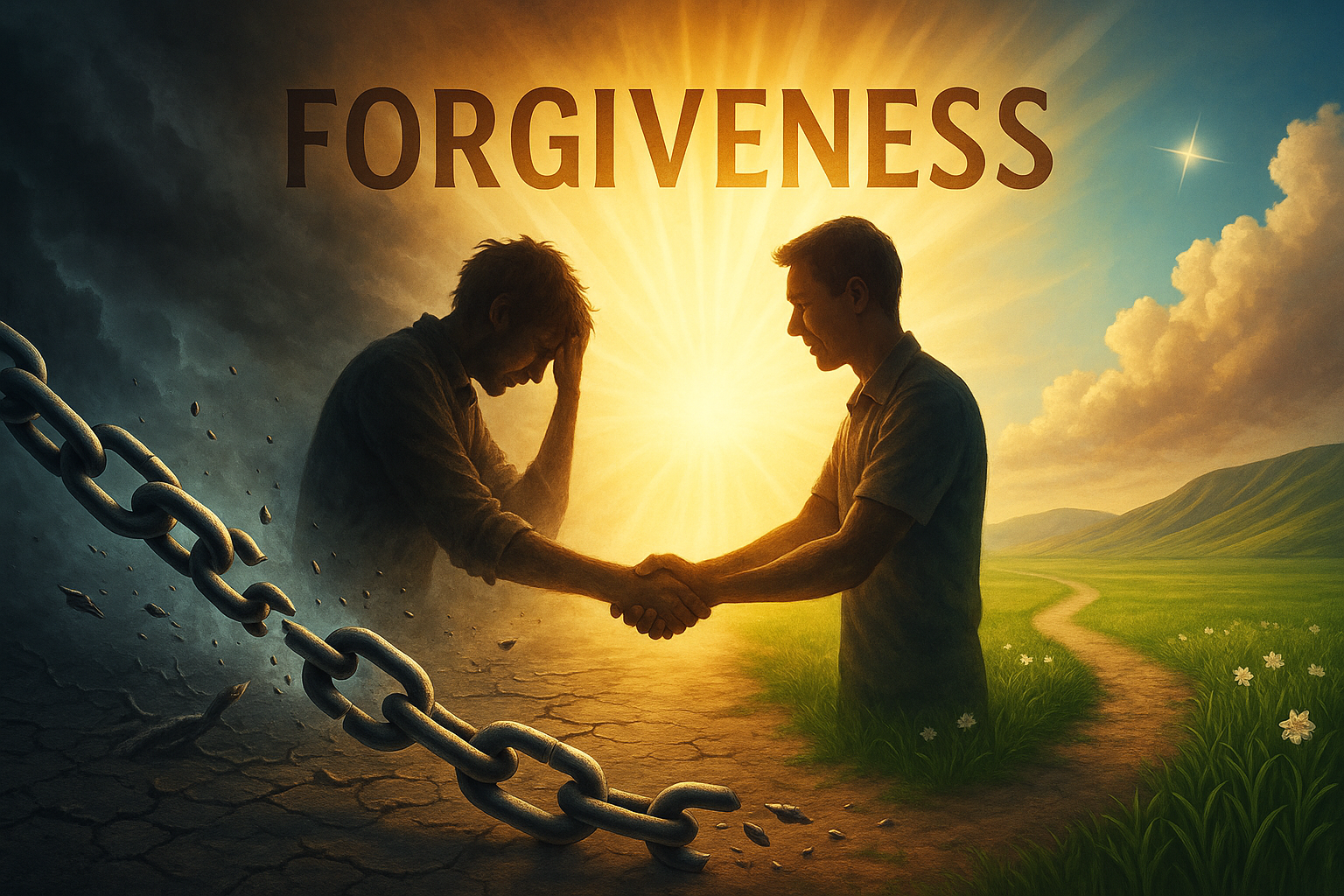
Forgiveness: The Divine Mandate of the Gospel
Forgiveness is a core principle of the restored gospel—both a divine commandment and a gift.
What Is Forgiveness?
Forgiveness is the spiritual process of releasing anger, resentment, or the desire for revenge. It does not excuse wrongs or deny the need for justice but places them in the hands of God. Rooted in Christ’s mercy and reliant upon His grace, forgiveness enables us to forgive others as we hope to be forgiven.
“For if ye forgive men their trespasses, your heavenly Father will also forgive you.”
Forgiveness: Our Divine Obligation
It is crucial to understand that forgiveness is not merely something God dispenses to us; it is a commandment He requires from us. The mandate to forgive is not optional or secondary—it is foundational to the gospel.
“I, the Lord, will forgive whom I will forgive, but of you it is required to forgive all men.”
We are commanded to forgive—regardless of whether those who have wronged us repent or seek our pardon. Forgiving others is a demonstration of our faith in Jesus Christ and our willingness to trust in His justice and timing.
Forgiveness Does Not Mean Permitting Evil or Abuse
It is vital to understand that forgiveness is not synonymous with enabling wrongdoing. Forgiveness should not be mistaken for tolerating evil or remaining in harm’s way. Victims of abuse are not commanded to passively submit—they may and should take steps to protect themselves and others. Church doctrine affirms that:
- You may forgive from your heart while also seeking legal or church intervention.
- Forgiveness refers to the internal release of hatred—not the removal of all consequences.
- Forgiveness coexists with healthy boundaries, law enforcement, and moral action.
Modern prophets and apostles have consistently taught that forgiving someone does not mean ignoring evil—it means refusing to allow hate or a spirit of revenge to control us. We are commanded to forgive all men, but we also seek justice, protection, and peace according to God’s law and the law of the land.
Forgiveness in the New Testament: Seventy Times Seven
When Peter asked how often he should forgive someone who wronged him, Jesus answered—not seven times, but “seventy times seven,” signifying limitless forgiveness (Matthew 18:22). The parable of the unmerciful servant underscores that those forgiven much must forgive much. Forgiveness, as taught by the Savior, transcends arithmetic—it is boundless and unconditional.
Forgiveness and the Higher Law: Doctrine and Covenants 98
In D&C 98, revealed amid intense persecution of the early Saints, the Lord deepened this teaching:
“Be not afraid of your enemies; but forgive them, for the Lord shall deliver you.”
This section reiterates the “seventy times seven” standard while providing further nuance:
- If someone repents after offending you—even repeatedly—you must forgive him (D&C 98:39–40).
- If someone does not repent, you must still “forgive him from thine heart” and leave justice to the Lord (D&C 98:44; D&C 64:10).
This revelation encourages disciples to bear patiently, to forgive repeatedly, to pursue peace, and to let God’s judgment prevail rather than pursuing personal vengeance.
Forgive All Men, but Vengeance Belongs to the Lord
“Of you it is required to forgive all men.” … “Vengeance is mine; I will repay.”
Modern prophetic teaching reinforces this balance: disciples are called to forgive with full hearts yet maintain righteous boundaries. Forgiving doesn’t mean excusing or condoning wrongdoing—it means surrendering resentment and trusting God to make things right.
Why Forgiveness Is Essential
1. To Receive Divine Forgiveness: The Lord warns that “he that forgiveth not his brother his trespasses standeth condemned before the Lord, for there remaineth in him the greater sin” (D&C 64:9). We cannot expect mercy from God if we refuse to extend it to others (see Matthew 6:14–15; D&C 64:9–10).
2. To Heal Our Hearts and Minds: Forgiveness liberates souls from bitterness, guilt, and anger, inviting Christ’s peace into our lives—just as described in official Church teaching on finding peace through forgiveness.
3. To Develop Christlike Character: Forgiveness refines us into embodiments of God’s mercy and charity, as taught in the Book of Mormon and reinforced by Church leaders.
Forgiveness Is a Choice—Not Something God Forces Upon Us
It is vital to recognize that forgiveness is not a change of heart God just does to us, nor is it an automatic result of His grace. Rather, forgiveness is a deliberate choice and an act of agency. The Lord commands us to forgive; He invites us to act, to yield our hearts, and to choose the higher way of mercy. While the Holy Ghost can soften hearts and inspire us toward compassion, the decision to forgive is ultimately ours. Only as we willingly release resentment, with faith in Christ, can His healing power fully flow into our lives.
How to Forgive and Be Forgiven
- Pray earnestly for the Spirit’s help to forgive.
- Remind yourself of the mercy and forgiveness you’ve received.
- Choose forgiveness even before feelings follow.
- Seek reconciliation where safe and appropriate, but without forcing it.
- Rely on God’s justice rather than pursuing vindication.
Forgiveness does not automatically restore trust nor remove the need for healthy boundaries—it is about freeing your heart from bitterness and allowing God to administer justice.
The Example of Jesus Christ
Jesus Christ modeled perfect forgiveness. From the cross, He prayed, “Father, forgive them; for they know not what they do” (Luke 23:34). He forgave those who denied, betrayed, and persecuted Him. Through His Atonement, no wound is beyond healing, and no heart too hardened to change.
Conclusion
Forgiveness is not an optional virtue—it is a divine command, a spiritual discipline, and a path to peace. The Lord has made it clear that withholding forgiveness is itself a serious sin, one that distances us from His grace and mercy. From the Savior’s teaching of forgiveness “seventy times seven” to the restorative counsel in D&C 98, Latter-day Saint doctrine teaches that forgiveness must be unending, sincere, and coupled with faith in God’s justice.
As we forgive others—and ourselves—we let Christ’s Atonement work in us. We find peace, reflect God’s mercy, and prepare for eternal progression. May we each move forward, trusting in His infinite grace, remembering that forgiveness sets hearts free.
References
- Matthew 6:14–15; 18:21–35
- Doctrine and Covenants 98:14, 39–48; 64:9–11; 82:23
- Romans 12:19
- Moroni 7:45–48
- Gospel Topics: Forgiveness, churchofjesuschrist.org
- Gordon B. Hinckley, “Forgiveness,” General Conference, Oct. 2005
- David E. Sorensen, “Forgiveness Will Change Bitterness to Love,” General Conference, Apr. 2003
- “Finding Peace through Forgiveness,” Ensign, June 2012
- Jeffrey R. Holland, “The Laborers in the Vineyard,” Ensign, May 2012